
Melbourne Cup Safety Leadership Continues: Five Years of Standing CT Screening, Zero Fatalities
Written: May 2026 Peer‑Reviewed
Introduction
As the Melbourne Cup enters 2026, Racing Victoria’s commitment to equine welfare continues to deliver measurable, life-saving outcomes. Mandatory standing CT screening, introduced in 2021, has now underpinned five consecutive Melbourne Cups without a catastrophic racing fatality, a significant milestone.
What began as a response to an unacceptable injury history has evolved into one of the most comprehensive pre-race veterinary screening programs in global racing, combining advanced imaging, longitudinal clinical assessment, and independent expert review.
Why the Protocol Exists
Racing Victoria introduced mandatory CT screening following a series of catastrophic limb injuries in the Melbourne Cup, particularly among international runners. Racing Victoria veterinarians have consistently stated that horse welfare and safety remain the fundamental priority. While risk can never be eliminated entirely, it can be significantly mitigated through early detection and evidence-based decision-making.
Since implementation, the results have been clear.
2021 to 2025, zero catastrophic Melbourne Cup injuries
Early identification of pre-fracture and stress-related pathology
Strategic withdrawals that prioritize long-term horse welfare over short-term competition
CT Screening Outcomes to Date
Melbourne Cup CT Screening Summary
2021: 39 horses scanned, 4 withdrawn, 10.25 percent
2022: 40 horses scanned, 3 withdrawn, 7.5 percent
2023: 52 horses scanned, 5 withdrawn, 10 percent
2024: 43 horses scanned, 3 withdrawn, 7 percent
2025: 40 horses scanned, 4 withdrawn, 10 percent
While the percentage of withdrawals remains relatively low, each decision reflects a deliberate, evidence-based approach that identifies horses at heightened risk before injury occurs.
The Werribee Veterinary Protocol: A Layered Safety Net
The standing CT scan is one component of a broader, multi-stage veterinary process conducted through Racing Victoria’s Werribee quarantine facility.
Under the oversight of Dr. David Sykes, supported by Dr. Amanda Piggott, the protocol includes:
Collection and review of full veterinary and medical histories
Multiple clinical examinations conducted weeks apart to detect subtle gait changes
Advanced distal limb imaging using standing MRI or preferably standing CT
Independent review by a seven-member international specialist imaging panel
Two specialists in Australia
Three specialists in the United States
Two specialists in the United Kingdom
Final examinations during quarantine before race clearance
This longitudinal approach allows veterinarians to detect changes over time, rather than relying on a single point-in-time assessment.
Why Weight-Bearing Standing CT Matters
Traditional digital radiography imaging cannot reveal the level of detail required to identify early-stage bone pathology and appropriately estimate risk of injury (Irandoust O’Neil et al. 2025). Weight-bearing standing CT fundamentally changes what veterinarians determine from routine injury prevention screening assessments.
With standing CT imaging, veterinarians can identify:
Subtle changes in bone density and structure (Figure 1)
Early stress-related bone remodeling
Pre-fracture pathology that is not visible on X-ray
Elevated strain through objective assessment of mechanical compromise using virtual mechanical testing (Brown Irandoust et al. 2026)
These findings allow intervention before injury occurs, rather than reacting after structural failure and stress fracture develops.
The scans are conducted with the horse standing naturally under mild sedation, capturing the limb under load, which helps with assessment of structural changes evident in the standing CT scan.
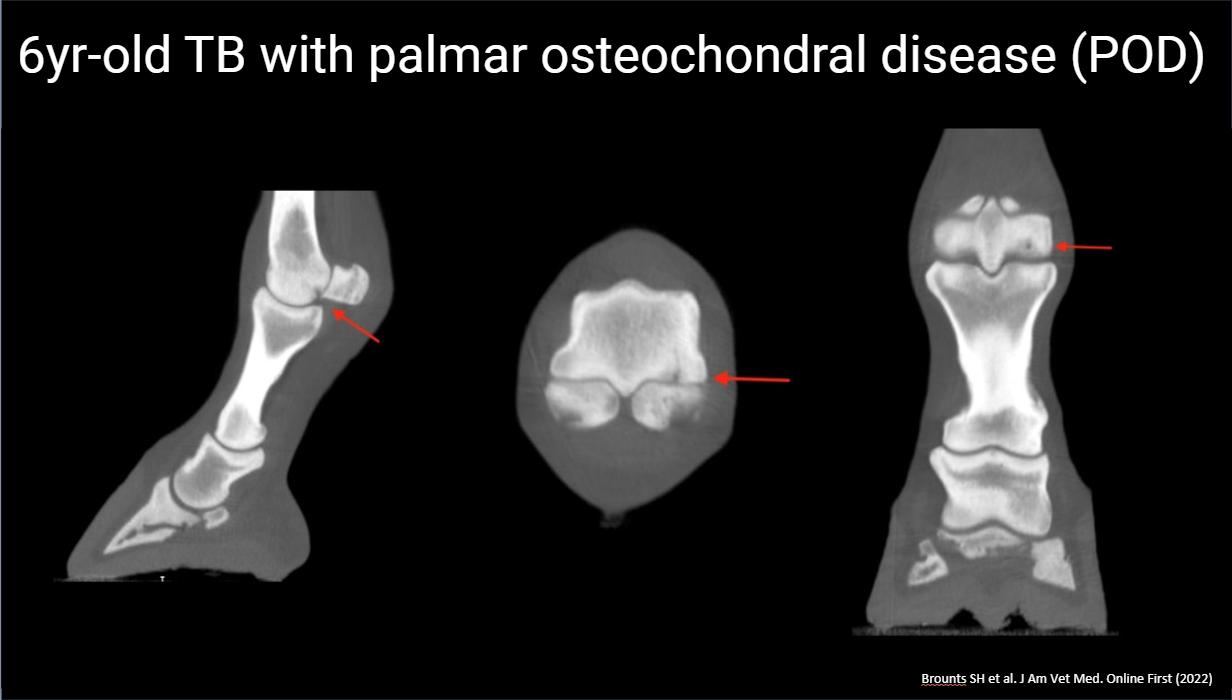
Figure 1: 6yr-old TB with palmar osteochondral disease (POD).
From Withdrawal to Success
The protocol’s value is not measured only in prevented injuries, but in preserved careers.
A clear example remains Without A Fight, who was withdrawn from the 2022 Melbourne Cup after standing CT imaging revealed concerning changes in his distal limbs and heightened risk of injury. Rather than ending his campaign, early detection allowed appropriate management. The following year (2023), he returned to win both the Caulfield Cup and the Melbourne Cup, achieving a historic double not seen in more than two decades.
This remains a defining case study in how welfare-first decision-making supports elite performance.
Continuous Monitoring Beyond Imaging
Once horses arrive in Melbourne, veterinary oversight continues through multiple layers of monitoring:
• Government veterinary health checks including blood sampling and nasal swabs
• Twice-daily temperature monitoring
• Ongoing motion assessment during track work
• Repeat clinical examinations consistent with pre-export assessments
• Post-quarantine standing CT imaging at the University of Melbourne Equine Centre
• Wearable technology tracking heart rate, speed, and workload
Each data point feeds into a unified risk-assessment framework, ensuring consistency from pre-export to race day.
Setting the Global Benchmark
Five years after implementation, Racing Victoria’s standing CT-based screening approach is increasingly referenced by racing jurisdictions worldwide. The Melbourne Cup now demonstrates that elite international racing and uncompromising welfare standards can coexist.
As equine diagnostic imaging continues to advance, the expectation is not only fewer catastrophic injuries, but earlier intervention, longer careers, and greater transparency in veterinary decision-making. Serious stress fractures of the fetlock should be viewed as avoidable injuries in Thoroughbred racehorse populations that are part of modern injury prevention screening.
Conclusion
The Melbourne Cup’s five-year record without a fatal injury represents a structural shift in how injury risk is managed at the highest level of Thoroughbred horse racing sport. Standing CT scanning, supported by layered veterinary assessment and independent review, has proven that proactive safety protocols save lives without compromising competition.
As the industry looks ahead, the Melbourne Cup remains not only a global racing icon, but also a benchmark for what modern veterinary care can achieve for equine welfare when technology, expertise, and responsibility align.
References
Brown, N., Irandoust, S., Thom, E.J., Whitton, R.C., Henak, C.R., Muir, P. Risk assessment for condylar stress fracture in elite racing Thoroughbreds using standing computed tomography-based virtual mechanical testing. Equine Vet J. 2026, epub.
Irandoust, S., O’Neil, L., Stevenson, C.M., Franseen, F.M., Ramzan, P.H.L., Powell, S.E., Brounts, S.H., Loeber, S.J., Ergun, D.L., Whitton, R.C., Henak, C.R., Muir, P. Comparison of planar digital radiography and helical standing computed tomography for assessment of condylar stress fracture risk in Thoroughbred racehorses. Equine Vet J. 2025a;57:723-736.