Fracture of the Left Mandible
FEATURED WINNER – Head Category
Fracture of the Left Mandible
15-year-old Welsh Section A mare
Cotts Equine Hospital
Dr. James Whitmore
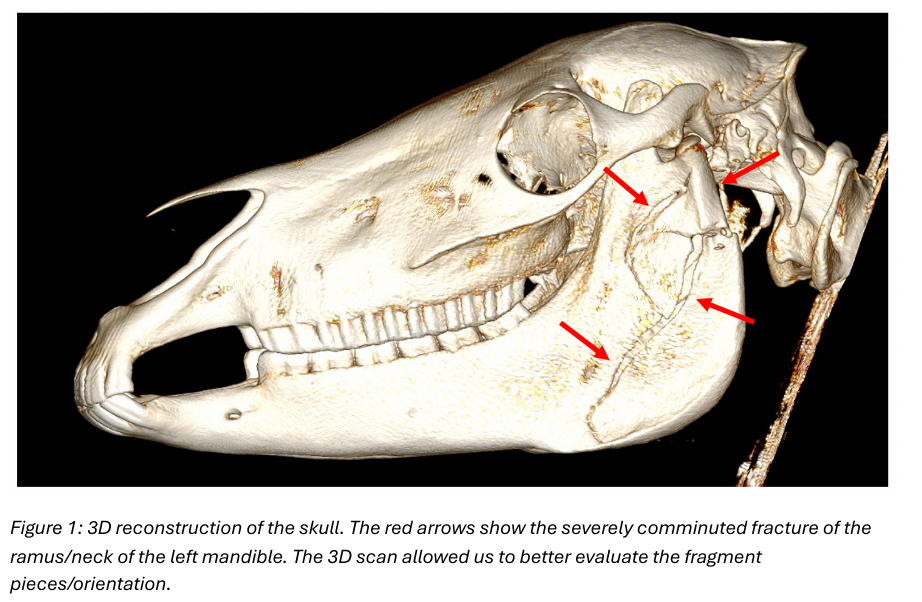
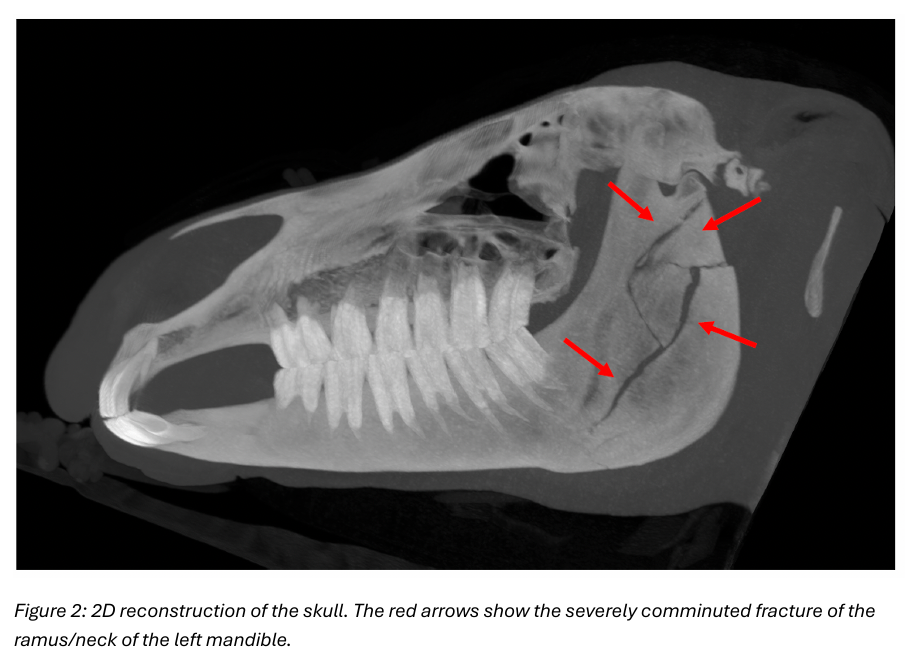
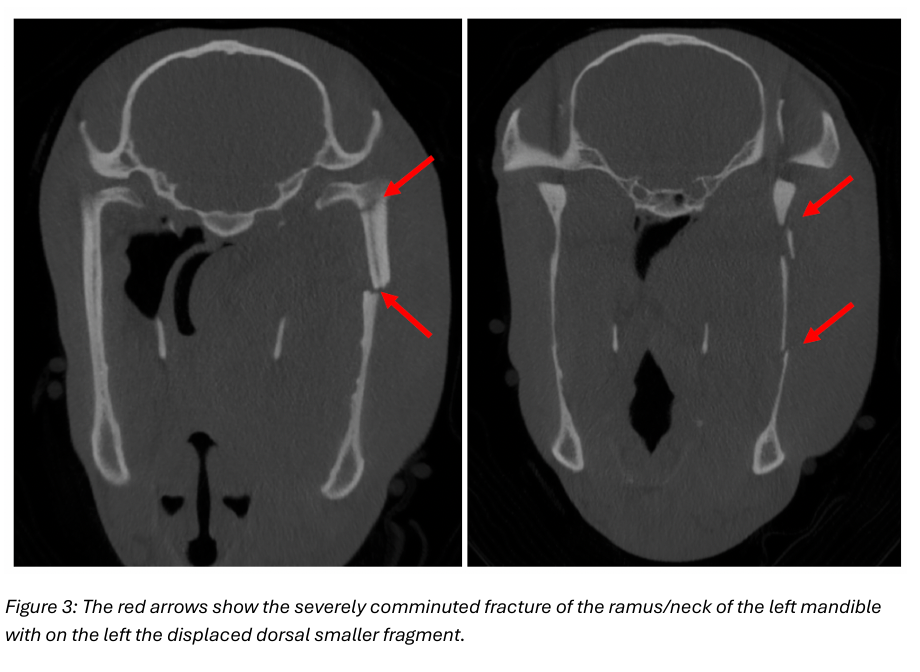
This case stood out for its precise visualization of mandibular fracture configuration, offering critical insight into fracture extent and alignment that informed treatment planning.
Case Summary
A 15-year-old Welsh Section A mare was referred for advanced imaging following multiple traumatic kicks to the head, with concern for injury to the left mandible and temporomandibular joint (TMJ). Clinically, the mare was dull and exhibited abnormal left optic reflexes, left-sided facial nerve deficits (drooping ear and muzzle), hypersalivation with dysphagia, and increased respiratory effort with inspiratory stridor. Due to the severity of neurologic and upper airway signs, a standing head CT was performed.
Imaging Findings
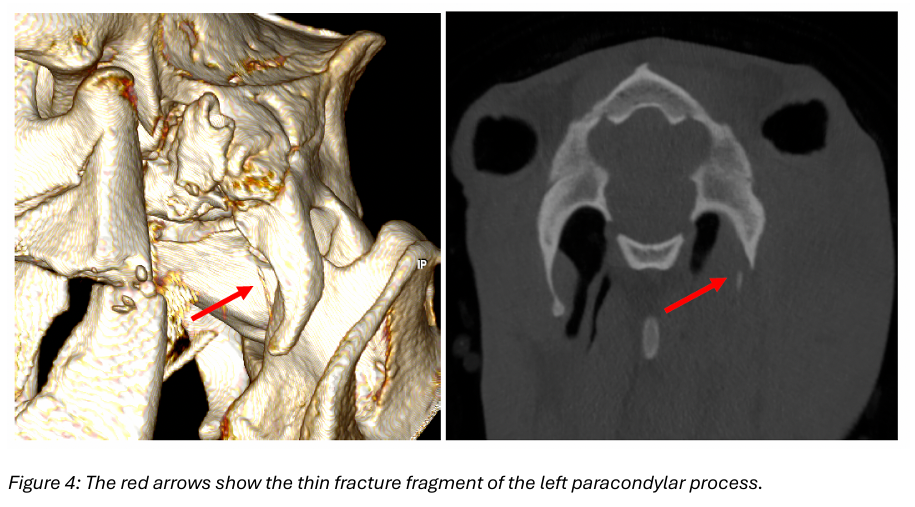
Standing head CT performed on November 11, 2025, revealed a severely comminuted, acute, mildly displaced closed and non-articular fracture of the ramus and neck of the left mandible. No evidence of TMJ luxation or joint incongruency was identified. A small, acute, mildly displaced non-articular fracture of the left paracondylar process was also present.
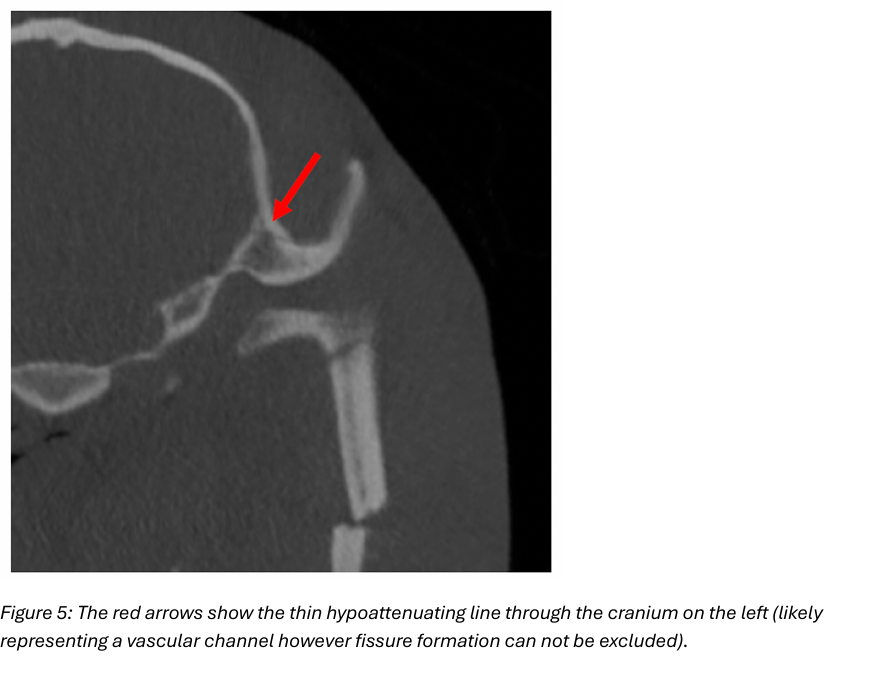
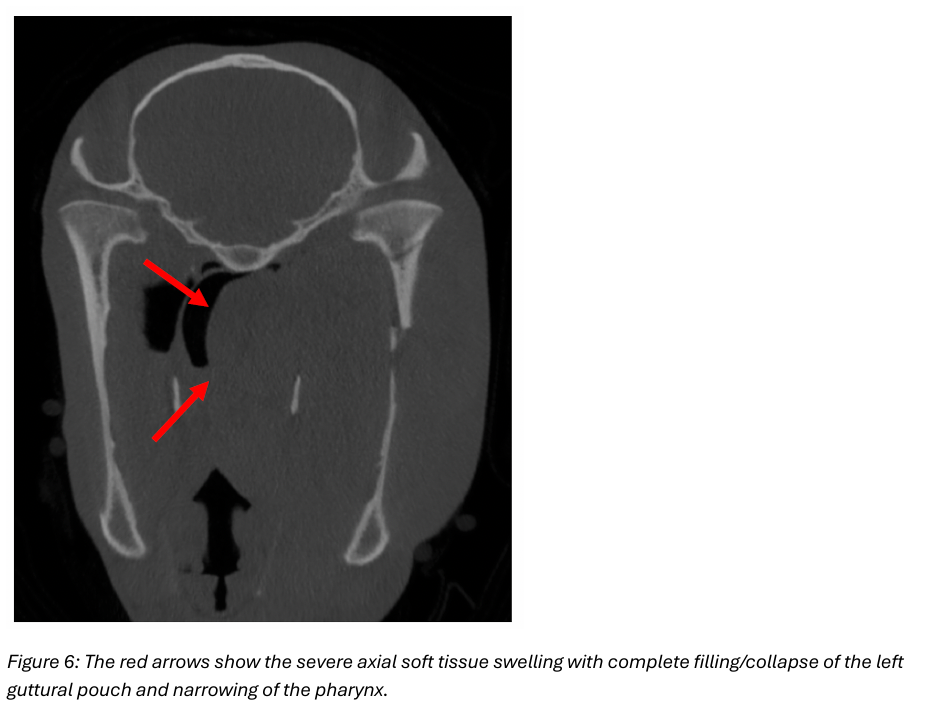
A faint hypoattenuating line within the left parietal bone/zygomatic arch was noted and considered most consistent with a vascular channel, with fissure formation considered less likely. Marked axial and abaxial soft tissue swelling was present along the left side of the head, resulting in moderate to severe pharyngeal narrowing. The left guttural pouch was collapsed and/or filled with soft tissue attenuation material, consistent with hematoma formation or compression secondary to surrounding soft tissue swelling.